austria
Austria’s Online Retail Market Back in the Fast Lane: 15% of Consumer Spending Goes Online – More Than Ever Before!
Austria’s online retail market is gaining significant momentum again. Almost 15% of relevant consumer spending is now generated online. On average, each Austrian spends around €1,400 per year online. However, not everyone is benefiting equally from the growing e-commerce market: international marketplaces continue to gain importance, Chinese providers are rapidly expanding their position, while the number of active online shops is declining. A recent analysis by RegioData Research reveals just how profoundly Austria’s online retail landscape is currently changing.
Online Retail Is Growing Again: Austria Ranks in the Upper Mid-Range in Europe
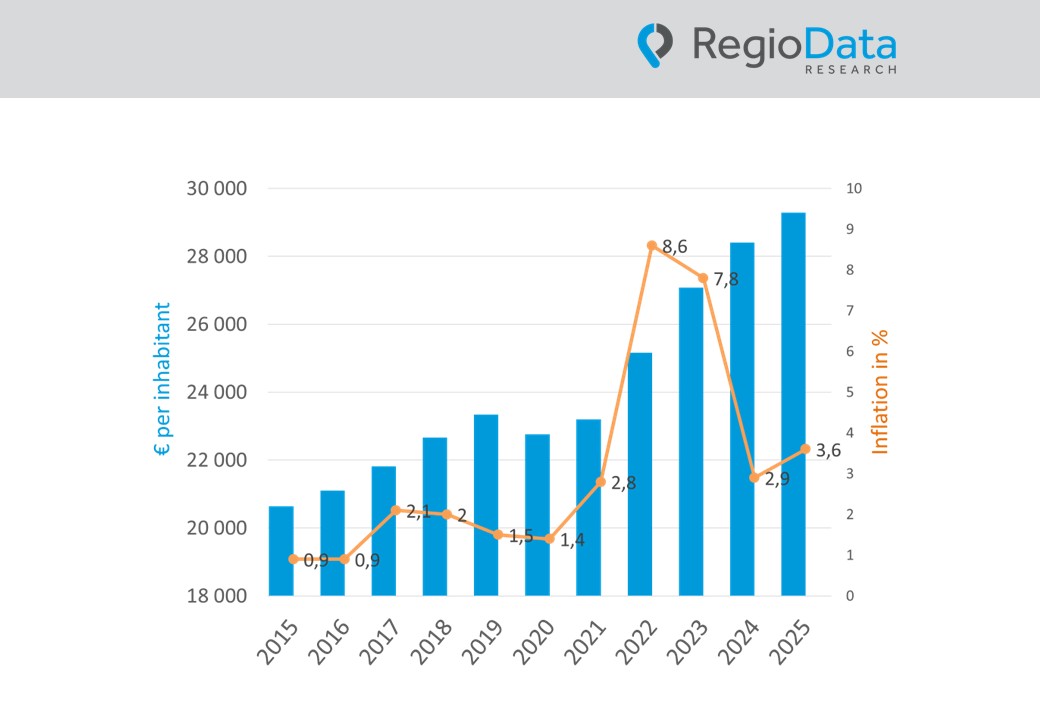
Following the exceptional growth seen during the COVID-19 years and a subsequent period of normalization, online retail is gaining momentum again. With almost 15% of relevant consumer spending now taking place online, Austria ranks in the upper mid-range in a European comparison. Annual online spending has reached around €1,400 per capita – a new record high. Online retail is therefore once again accounting for a growing share of Austria’s consumer market.
However, the extent to which consumers use the internet as a shopping channel varies considerably by product category. The so-called online affinity describes consumers’ tendency to purchase certain products online rather than from brick-and-mortar retailers. It is particularly high for clothing and electronics, which are also among the highest-spending categories in Austrian online retail.
As online affinity increases, the competitive landscape is changing as well. Austrian retailers are increasingly competing not only with domestic providers, but directly with international online shops and global platforms.
Only Just Over 40% of Online Spending Goes to Austrian Online Shops
For domestic retailers, however, it is not only important how much consumers spend online, but above all where that money ends up. Just over 40% of Austrian online spending goes to Austrian online shops. Conversely, this means that the majority of domestic online spending already flows to providers outside Austria.
Even this 40% needs to be viewed in more detail. An Austrian online shop – or a shop with an Austrian market presence – is not necessarily owned by an Austrian company. A large proportion of these shops belong to international retail groups. The share of online spending that ultimately remains with purely Austrian-owned companies is therefore significantly lower.
Marketplaces Are Taking Over Online Retail
At the same time, the structure of online retail itself is changing. Traditional shopping from individual online stores is increasingly losing ground to major platforms.
More than 40% of Austrian online spending already takes place via online marketplaces. This means that a substantial share of digital retail is now handled through platforms that bring together products from a wide range of retailers in one place.
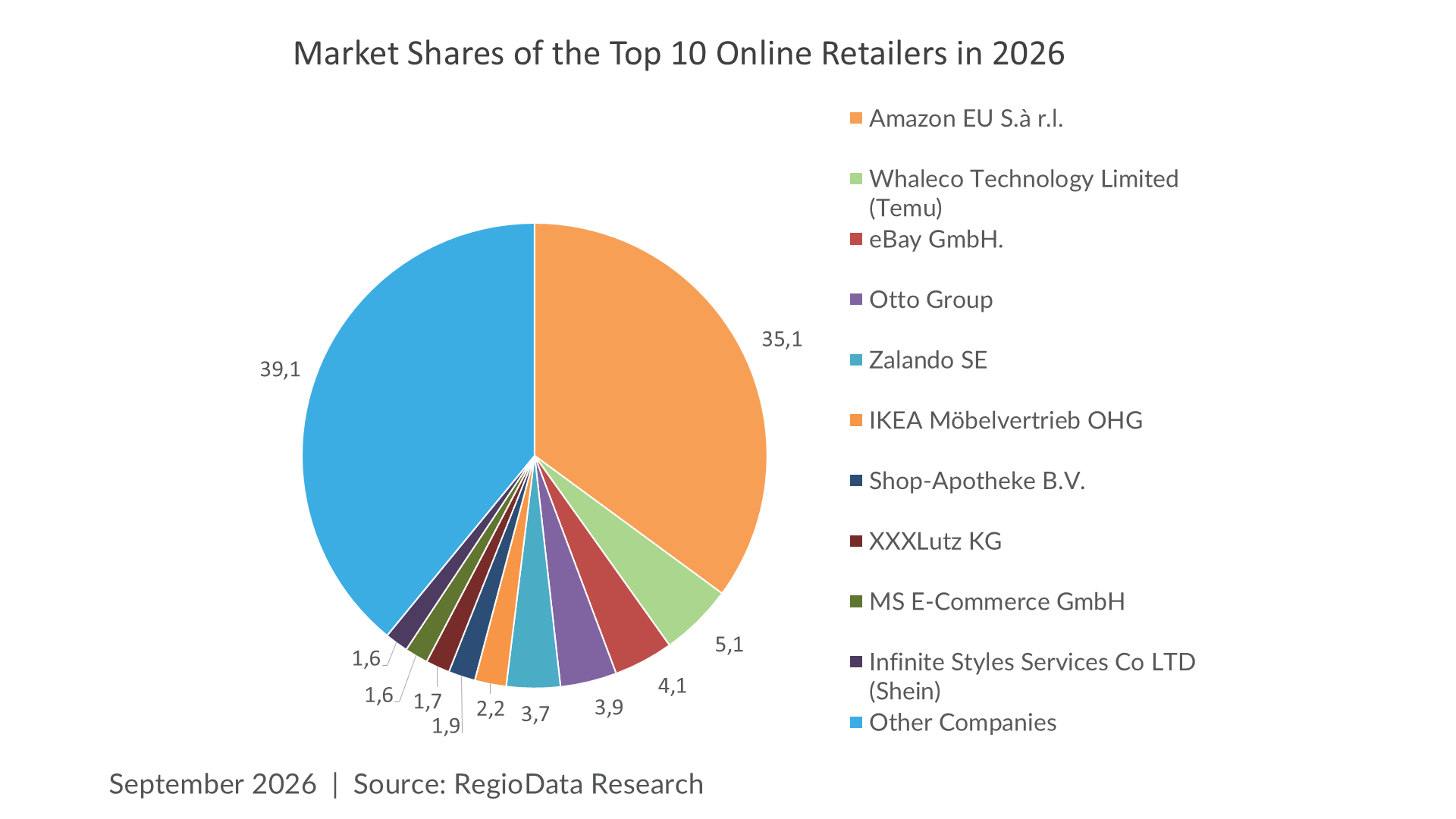
The undisputed market leader is Amazon. Amazon and its marketplace together account for around 35% of Austria’s entire online retail market. In other words, more than one in every three euros Austrians spend online flows through the Amazon ecosystem.
Temu, Shein and AliExpress Already Account for 7.9%
Alongside established international platforms, another group is experiencing particularly dynamic growth: Chinese online providers. Temu, Shein and AliExpress already account for a combined 7.9% share of Austria’s total online retail market. This means that almost one in every twelve euros spent online in Austria now goes to these three providers.
Higher Online Sales, but Fewer Online Shops
At first glance, the development in the number of providers appears contradictory: while online spending is increasing, the number of active online shops is declining.
Smaller, less specialized online shops are particularly affected. The days when a broad product range and a technically functional online shop were enough to automatically benefit from the growth of e-commerce are over.
Specialists Can Hold Their Own Against the Major Platforms
Size alone, however, does not determine success. Alongside international platforms, specialized providers in particular are recording growth.
Growth segments include health, technology and sports equipment, for example. Shop Apotheke is also among the rising players in Austria’s online retail market.
Online retail is therefore showing a development already familiar from other areas of the retail sector: the middle of the market is coming under pressure. On the one hand, very large platforms and marketplaces are gaining ground; on the other, successful specialists are strengthening their positions.
Conclusion: Online Retail Is Growing – and Becoming More Concentrated
Austria’s online retail market is back in the fast lane, although under different conditions than during the COVID-driven boom. Online spending is reaching new record highs, while at the same time the number of providers is declining and an increasing share of the market is becoming concentrated among international platforms.
The winners of this development are major marketplaces and international providers, as well as clearly positioned specialists. Smaller, less differentiated online shops, on the other hand, are increasingly coming under pressure.
Online retail is therefore not only continuing to grow – it is also entering a new phase of internationalization, market concentration and consolidation.
Share post