austria
Purchasing Power in Europe: Eastern Europe Is Catching Up Fast
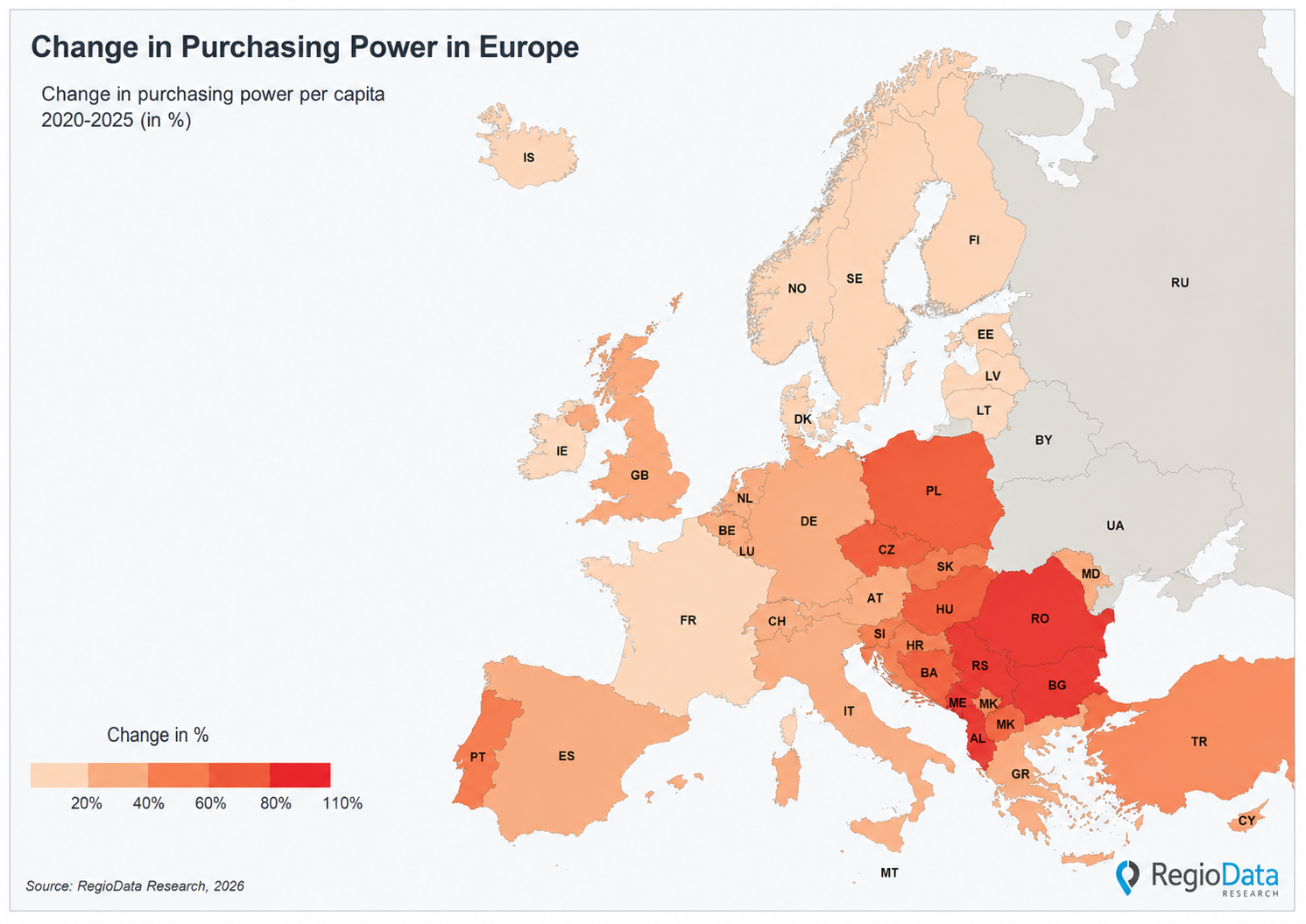
Europe’s purchasing power landscape is changing. A recent analysis by RegioData Research shows that between 2020 and 2025, countries in Central, Eastern and South-Eastern Europe in particular recorded strong growth. While nominal purchasing power per capita almost doubled in some markets within just five years, growth was considerably weaker in several traditionally high-purchasing-power countries. Austria, with an increase of around 25%, ranks in the middle of the field.
Central, Eastern and South-Eastern Europe in the Fast Lane
The strongest percentage increases in nominal purchasing power since 2020 have primarily been recorded in countries that started from a comparatively lower level. Bulgaria and Serbia are leading the way, having almost doubled their purchasing power per capita, measured in euros, within five years. Croatia and Poland show the same trend and exceptionally strong momentum.
Even when taking inflation and potential currency effects into account, this represents a remarkable development. The figures point to a clear catching-up process within Europe: Central, Eastern and South-Eastern European markets in particular are gaining purchasing power and are therefore also opening up investment opportunities that may be less attractive in Western Europe.
Top Performers in Purchasing Power Growth 2020–2025
Country Change
Bulgaria +108%
Serbia +96%
Poland +76%
Croatia +50%
High-Purchasing-Power Countries Are Growing Much More Slowly
While Eastern and South-Eastern Europe are recording particularly high growth rates, the momentum is considerably more moderate in many of Europe’s traditionally high-purchasing-power countries. This is particularly evident in Northern Europe: between 2020 and 2025, nominal purchasing power increased by only around 20% in Denmark, around 23% in both Norway and Finland, and around 24% in Sweden.
A similar development can be observed in other established affluent markets. Switzerland, for example, recorded an increase of around 27% over the same period. These countries therefore remain well behind the growth rates of dynamic markets such as Bulgaria, Serbia and Poland.
However, these lower growth rates do not mean that these countries are losing purchasing power. Rather, they are starting from a comparatively high purchasing power level. The development does show, however, that countries with previously lower starting levels are catching up much faster and that purchasing power patterns across Europe are gradually shifting.
Austria Is Losing Momentum
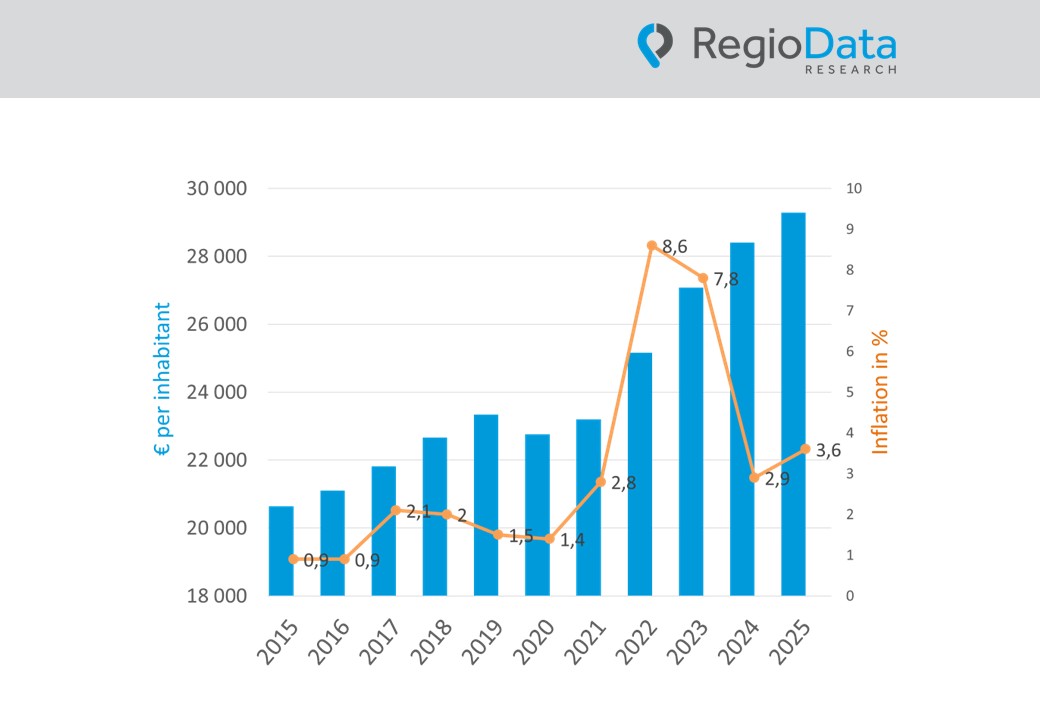
Between 2020 and 2025, Austria recorded a nominal increase in purchasing power of around 25%. However, this nominal increase was completely offset by inflation. In real terms, purchasing power therefore did not increase. Austria’s development thus remains well behind the momentum seen in Europe’s rapidly catching-up markets.
A similar picture can be seen in neighbouring Germany, where purchasing power has increased by around 26% since 2020. However, inflation in Germany was significantly lower over this period, resulting in a small increase in real purchasing power.
For Austria’s position within Europe, this means that if the trend continues as expected, the purchasing power gap between Austria and Europe’s dynamically growing markets will gradually narrow.
Europe’s Purchasing Power Landscape Is Shifting
Developments over the past five years point to increasing convergence across Europe. The highest percentage increases are not found in the already wealthiest countries, but rather in many countries that started from a lower level.
Significant differences in absolute purchasing power nevertheless remain. While an average resident of Switzerland has purchasing power of more than €50,000 per year, the corresponding figure in Serbia is below €7,000. However, the strong growth momentum in parts of Central, Eastern and South-Eastern Europe shows that the balance is gradually shifting over the long term.
Conclusion
Europe’s purchasing power is growing – but at very different speeds. While established affluent markets are recording only moderate growth in some cases, countries such as Bulgaria, Serbia, Croatia and Poland are catching up rapidly. Purchasing power in Austria continues to grow in nominal terms, but it cannot keep pace with the momentum of Europe’s fastest-growing markets.
Share post