austria
Consumer Spendings 2026: Austrians Are Drinking Differently: Less Alcohol, More Coffee and Functional Beverages
Austria’s beverage market is undergoing a transformation – both in retail and in the hospitality sector. While traditional alcoholic beverages such as beer and wine are gradually losing importance, other beverage categories are experiencing significantly stronger growth.
Younger generations in particular are reshaping consumption habits by increasingly favoring healthier, more conscious, and functional products.
Current consumer spending trends clearly show that Austrians are not drinking less – they are drinking differently.
Young People Drink Less Alcohol and Are Changing an Entire Consumption Culture
Austria has traditionally been a country with a strong affinity for alcohol. Beer, wine, and spir its have long been deeply embedded in everyday life and leisure culture. However, recent developments indicate a clear shift: younger people today consume significantly less alcohol than previous generations. Whereas earlier generations often associated alcohol with socializing, nightlife, and status, younger consumers increasingly prioritize health and fitness, mental well-being, self-optimization, and more mindful consumption.
This trend is particularly evident in regular alcohol consumption. In 2011, around 14% of Austrians aged 12 to 17 consumed alcohol at least once a week. Most recently, this share declined to just 8.7% – a decrease of approximately 38%.
At the same time, demand for non-alcoholic beverages, coffee, zero-sugar products, functional drinks, and alternative lifestyle beverages continues to grow steadily.
Alcohol is gradually losing its role as a social obligation. As a result, Generation Z is fundamentally reshaping Austria’s drinking and consumption culture.
Retail: Beer Is Losing Importance While Non-Alcoholic Alternatives Gain Momentum
The trend is particularly visible in beer consumption. For decades, beer was a cornerstone ofAustrian consumer culture, but spending and purchasing behavior have recently weakened. Current data show that consumer spending on beer in food retail declined by 6.6%. Other alcoholic beverage categories are also experiencing slower growth, while wine remains largely
stable. At the same time, non-alcoholic alternatives are gaining significant market share. Alcoholfree beer is developing dynamically and is increasingly purchased by Austrian consumers. It has evolved from a niche product into an established beverage category in both retail and gastronomy.
How Alcohol Consumption Has Changed Over Time
Consumer spending on alcoholic beverages in food retail increased considerably between 2013 and 2022. Since reaching its peak in 2022, however, a noticeable stabilization and slight decline has become apparent.
Beer remains the most important category within Austria’s beverage market but is losing momentum over the long term. Wine and spirits, by contrast, have recently shown more stable performance.
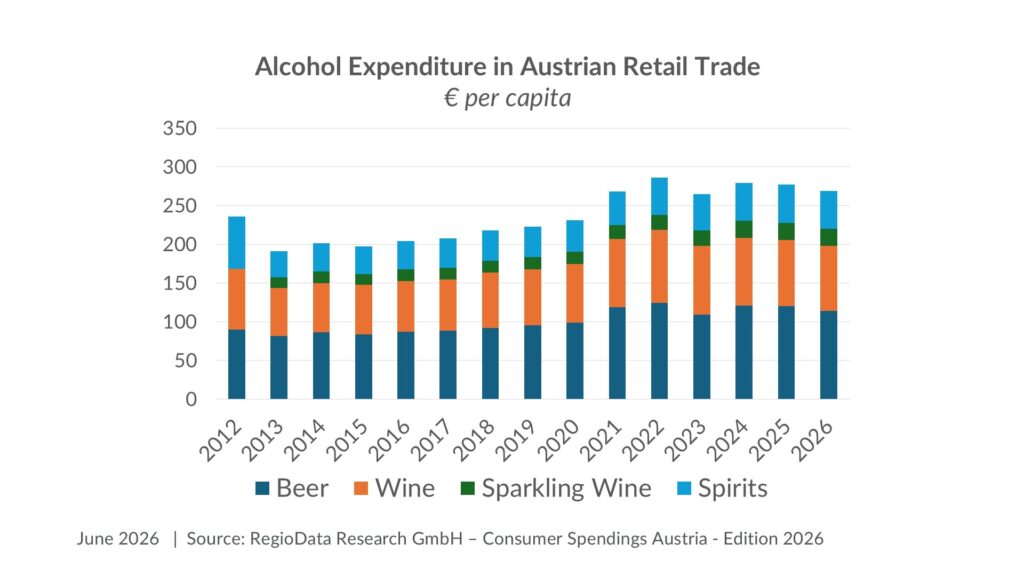
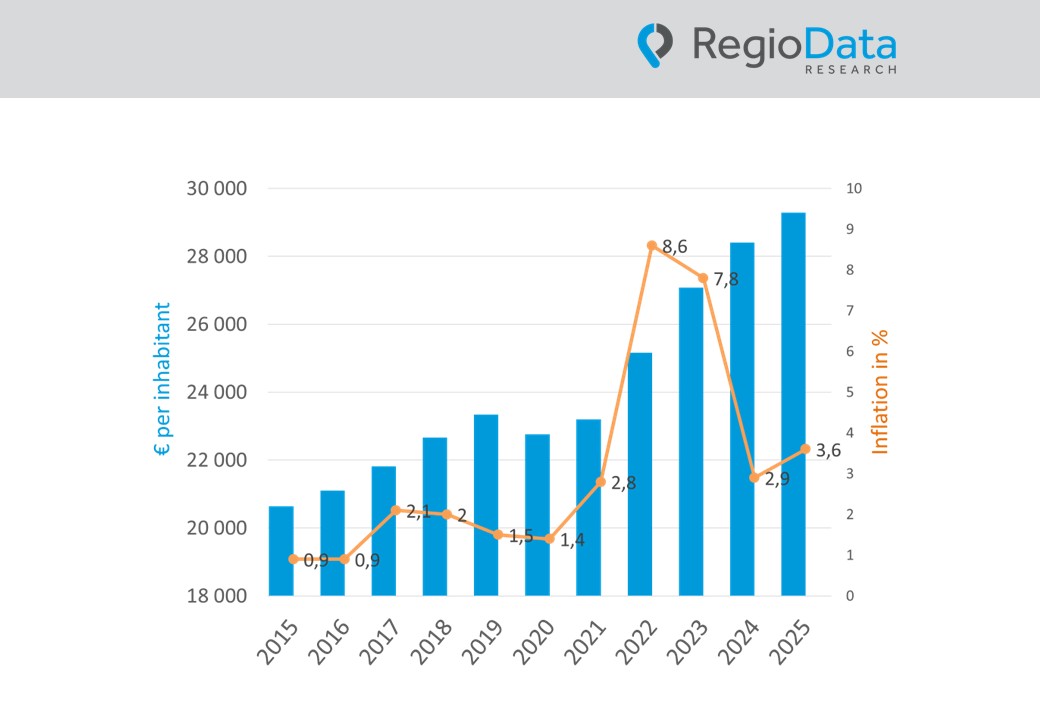
Although the chart initially suggests rising expenditure on alcoholic beverages in Austria, this development must be viewed in the context of inflation and rising prices. Since 2016, inflation in Austria has increased by almost 50%, while spending on alcohol has risen by only around 15% during the same period. In real terms, this means that Austrians are spending significantly less on alcohol today thanthey did several years ago.
Consumption growth is clearly lagging behind overall price increases, indicating that alcoholic beverages are gradually becoming less important in everyday consumption.
Austria’s Most Popular Beverages Are Changing
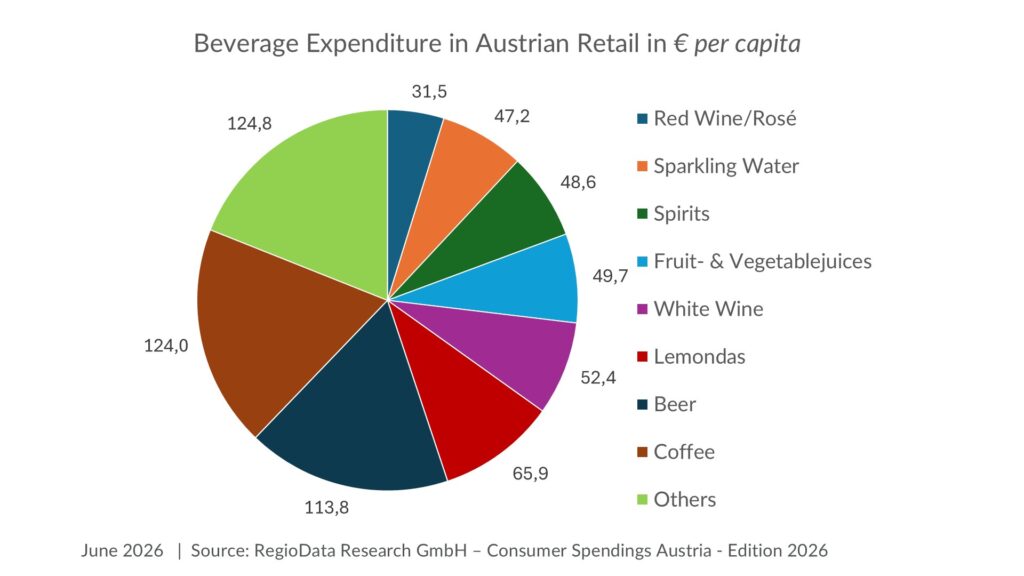
Mineral water, fruit and vegetable juices, and soft drinks now account for substantial per-capita consumer spending. In 2026, expenditure on fruit and vegetable juices is expected to
reach €49.7 per capita, compared with €39.6 in 2016.
Coffee is particularly noteworthy. Austrians now spend an average of around €125 per person annually on coffee in retail alone. Ten years ago, spending amounted to only about €70 per capita. As a result, coffee has become one of the most important beverage categories in Austrian food retail and is increasingly evolving from a traditional everyday beverage into a
lifestyle and premium enjoyment product.
Products such as specialty coffee, energy drinks, functional beverages, and zero- or sugarfree drinks are gaining importance continuously. Younger consumers in particular are increasingly choosing beverages that offer additional benefits, such as energy, focus, or protein content, thereby driving new consumption trends.
Conclusion: Austrians Are Drinking Differently and More Consciously
Current developments do not indicate a decline in beverage consumption but rather a fundamental shift in consumer preferences.
What is currently happening in the alcohol and beverage market is not a short-lived trend but part of a broader societal transformation. Consumption is becoming more conscious, individ
ualized, and increasingly focused on health, quality of life, and personal well-being. Traditional alcoholic beverages are gradually losing relevance, while coffee, alcohol-free alternatives, functional beverages, and health- and lifestyle-oriented products are gaining importance. Younger generations are the key drivers of this transformation and are reshaping Austria’s drinking and consumption culture for the long term.
The key takeaway is therefore clear: Austrians are not buying fewer beverages – they are
drinking more consciously and selectively than they did just a few years ago.
Share post